
Truck Loans Australia :: News
SHARE

Share this news item!

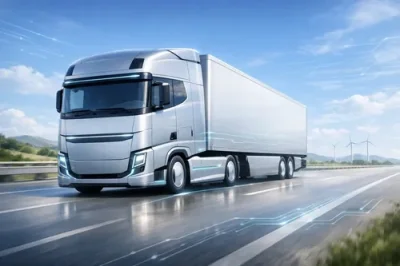
Volvo's Next-Generation Electric Trucks: A Leap Forward for Australian Transport

Enhanced Performance and Range in Volvo's Latest Electric Truck Line-Up

Volvo's Next-Generation Electric Trucks: A Leap Forward for Australian Transport?w=400

The information on this website is general in nature and does not take into account your objectives, financial situation, or needs. Consider seeking personal advice from a licensed adviser before acting on any information.

Volvo Trucks has introduced its latest range of heavy-duty electric vehicles, including the FH, FM, and FMX models, now boasting an impressive range of up to 400 kilometres.
This development marks a significant advancement in electric truck technology, offering Australian operators enhanced performance and flexibility.

The new models feature an all-new driveline designed for maximum adaptability across various applications. This includes an integrated gearbox power take-off (PTO) that allows for the operation of auxiliary equipment such as concrete mixers or refuse units without the need for additional motors. This innovation simplifies operations and reduces maintenance requirements.

Charging efficiency has also been improved, with the ability to charge from 20% to 80% in just 60 minutes using a 350kW Combined Charging System (CCS). This rapid charging capability minimises downtime, a crucial factor for businesses relying on timely deliveries.

Tom Chapman, Vice President of Volvo Trucks Australia, emphasised the company's commitment to electrification, stating, "We stand firm in our belief that electric vehicles will deliver a large part of the world's truck transport in the future. With the amazing performance of all our new trucks, it's easy to see why."

These advancements align with Volvo's broader strategy to achieve net-zero emissions by 2040, utilising a combination of battery electric, fuel cell electric, and renewable fuel-powered combustion engines.

For Australian businesses, the introduction of these next-generation electric trucks presents an opportunity to reduce operational costs associated with fuel and maintenance, while also contributing to environmental sustainability. As the transport industry continues to evolve, embracing such innovations will be key to maintaining competitiveness and meeting regulatory requirements.

Published:Sunday, 24th May 2026
Author: Paige Estritori

Please Note: We do not endorse any specific products or companies. Some content is sourced from third parties, including press releases, and may not be independently verified for accuracy or completeness.

Share this news item:

Rate this article

0 Comments

No comments yet. Be the first to share your thoughts.

Finance News

New FLEETLEAP Alliance Puts Operating Data Into Truck Buying Decisions
18 Nov 2026: Paige Estritori
A new national freight initiative, FLEETLEAP, has added a practical data point to Australia’s truck investment conversation by bringing together industry bodies, energy specialists, insurers and charging providers to improve information on fuel efficiency and electric trucks. - read more
Fuel Cost Recovery Returns to Road Transport Contracts
17 Nov 2026: Paige Estritori
Australia’s road transport fuel cost recovery order is set to restart on 23 November 2026, creating a fresh cash-flow consideration for owner-drivers, small fleet operators and businesses further up the freight contracting chain. The Fair Work Ombudsman says the revived obligations follow a Fair Work Commission decision on 9 November and include updated rules on monthly rate adjustments, fuel levies and how increased diesel costs are passed through contractual chains. - read more
October Truck Sales Add Caution to Finance Planning
11 Nov 2026: Paige Estritori
Australia’s new truck and heavy van market entered the final quarter on a softer footing, with October 2026 deliveries reported at 3,215 vehicles across the T-Mark categories. That was below September and materially lower than October 2025, suggesting many operators are still delaying replacement decisions despite the usual pre-Christmas freight season approaching. - read more
RBA Rate Rise Puts Truck Loan Planning Back in the Spotlight
04 Nov 2026: Paige Estritori
The Reserve Bank of Australia’s 3 November 2026 decision to lift the cash rate target by 25 basis points to 4.85 per cent has made finance planning more important for Australian truck buyers. For sole traders, owner-drivers and fleet operators, the move does not automatically change every existing truck loan, but it can influence new lending, variable-rate facilities, refinance discussions and the way lenders test repayment capacity. - read more
Charging Access Becomes a Bigger Part of Electric Truck Funding
28 Oct 2026: Paige Estritori
Australia’s electric truck conversation has shifted from vehicle availability alone to the practical question of where, when and how commercial vehicles will charge. Ampol’s October 2026 activity has made that shift clearer, with the company announcing a proposed acquisition of Evie Networks and a separate memorandum of understanding with Foton Mobility Distribution to explore charging solutions for electric commercial vehicles. - read more


Truck Loan Articles

Truck Financing 101: How to Choose the Right Loan for Your Commercial Vehicle
Choosing truck finance is not only about obtaining funds for a commercial vehicle. For Australian businesses, the loan structure, repayment schedule, security requirements and end-of-term obligations can all affect cash flow and long-term planning. This guide explains common truck finance options, key loan features and practical checks to consider before applying. - read more
How to Create a Safety-First Culture in Your Trucking Business
Creating a safety-first culture in the trucking industry goes beyond merely following regulations. It means prioritizing the well-being of drivers, the integrity of the cargo, and the security of the fleet. In this context, a safety-first mindset influences daily operations, decision-making, and long-term strategies. It's about cultivating a work environment where safety is an integral part of every action and thought. - read more
Commercial Truck Loan Approval with Limited Documents or Credit Issues
Limited paperwork, variable income or past credit issues can make a commercial truck loan application more complex, but they do not always rule out finance. This guide explains how lenders may assess low doc truck loans and bad credit truck loans, what evidence may help, and the risks to consider before applying. - read more
How to Find Competitive Commercial Vehicle Loan Rates for Your Business
Commercial vehicle loan rates can affect both monthly cash flow and the total cost of acquiring a truck, van or utility vehicle for business use. This guide explains how commercial vehicle finance works, what lenders may assess, and how Australian businesses can compare rates and terms before applying. - read more
Truck Fleet Refinancing in Australia: When It May Help and What to Check
Refinancing a truck fleet means replacing one or more existing commercial vehicle loans with new finance terms. For Australian fleet owners, it may be worth reviewing when rates, cash flow, vehicle equity, business goals or current loan conditions have changed. - read more


Knowledgebase
Balance Sheet:
A financial statement that summarizes a company's assets, liabilities, and shareholders' equity at a specific point in time.