

Truck Loans Australia :: Articles

Choosing a Home Loan Mortgage Broker

What should I consider when choosing a mortgage broker for my home loan?

Choosing a Home Loan Mortgage Broker

The information on this website is general in nature and does not take into account your objectives, financial situation, or needs. Consider seeking personal advice from a licensed adviser before acting on any information.

There are a number of potential pitfalls in relying on a mortgage broker for the best home loan solution ... particularly given the enormous growth in the broking industry and the recent entrance of new players.
Getting a broker to arrange your loan can certainly save a lot of time and hassle, but borrowers still have to do their homework to ensure the service they expect is the one that's delivered. 
Obtaining genuinely objective recommendations from brokers, confusion over just who's a lender and who's a broker and lender delays in processing applications mean that using a broker is not always the quick and easy solution to home borrowing it may at first appear.
With the proportion of loans arranged through brokers rising from nowhere to around 30 percent in just a few years, the industry has attracted all manner of people and organisations wanting to enter this lucrative commission-based industry.
Establishing that any broker you intend to use has experience and qualifications as well as being committed to the industry code of practice is vital to ensure you're getting the best loan for your needs, within a reasonable timeframe.
A number of lenders are also now acting as brokers and some borrowers may be confused over whether they're dealing with an independent broker offering a range of loans, an agent for one lender only, or someone who wears both hats. 
Borrowers must establish with any loan representative just what their role is and how they're being paid so they can judge the integrity of loan recommendations being provided.
Once a broker is found and a loan recommended, some lenders have had difficulty coping with the volume of loans coming through the broker channel leading to delays lasting weeks.
This can be a major concern for those home buyers who have little time to arrange loan finance upon purchase.

The 12 things you must know before obtaining your home loan through a broker:

  • A broker should have a wide range of home loans from a wide variety of lenders, eg. banks, and non-banks. The wider the choice, the better the chance of finding the loan that suits you best.
  • Check the qualifications and experience of your broker, even ask for references from previous borrowers. Are they an MIAA member? Have they completed training courses?
  • Ensure your broker is not an agent for one lender in disguise. Some lenders now operate as brokers too so establish with any broker representative exactly what their role is.
  • Make sure your broker discloses all commission and payments received so you can judge whether a particular loan recommendation is being influenced by how much the broker will be paid.
  • Does the broker charge a fee? Many brokers will not charge borrowers for using their service, others will, so enquire about fees at the outset
  • Ask your broker how the loans they offer are researched and rated. Good brokers should be able to clearly outline their criteria
  • Ask your broker to provide a formal comparison of any loans recommended including the upfront and ongoing fees and the AAPR (average annual percentage rates). Ensure the AAPR is calculated specifically for the amount you want to borrow.
  • Always do some double-checking yourself to satisfy yourself you've been given unbiased and correct information.
  • Check what service is offered by the broker after the loan is negotiated. Will the broker be available for subsequent loan enquiries? What happens if there is a dispute between you and the lender?
  • Will your broker comply with the Privacy Act to ensure the security of your personal and financial details?
  • Your broker should have professional indemnity insurance. This safeguard will help you in the event of legal action.
  • As a last resort, the independent Mortgage Industry Ombudsman Scheme (1800 138 422) is available if there is a dispute you can’t resolve with your broker directly.

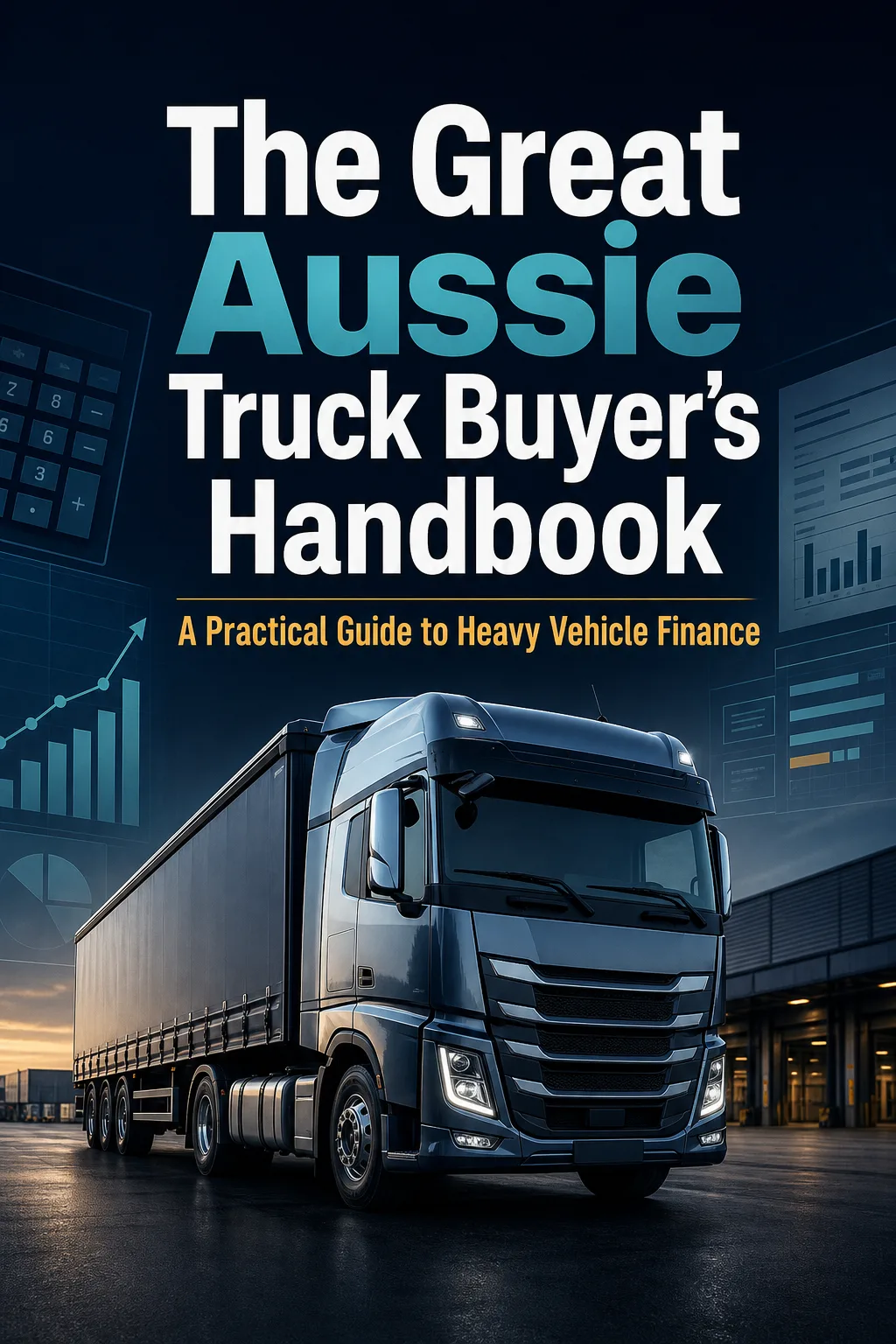
The Great Aussie Truck Buyer's Handbook: A Practical Guide to Heavy Vehicle Finance

The Great Aussie Truck Buyer's Handbook: A Practical Guide to Heavy Vehicle Finance image

Buying or financing a truck in Australia can affect more than the monthly repayment. The loan structure, fees, deposit, balloon payment, vehicle age and intended use can all shape cash flow and total borrowing cost. This practical guide is written for sole traders, tradies, logistics operators, fleet managers, small business owners and personal truck buyers comparing truck finance options. It explains commercial and personal truck loans, leases, chattel mortgages and hire purchase arrangements in clear, general terms. Inside, readers will find repayment factors, eligibility considerations, cost checklists, planning examples, case studies and questions to ask before making an informed finance enquiry.

Published: Sunday, 1st Aug 2021
Author: Paige Estritori

Rate this article

0 Comments

No comments yet. Be the first to share your thoughts.


Truck Loan Articles

Trucking Finance: How Leasing Can Support Business Growth
Truck leasing can help Australian trucking businesses access vehicles and equipment without the upfront cost of buying outright. This guide explains how leasing works, what to compare before signing, and how to manage leased trucks responsibly. - read more
Heavy Vehicle Finance in Australia: Options, Process and Key Checks
Heavy vehicles support transport, construction, agriculture and other Australian industries, but buying or replacing them can require substantial capital. This guide explains common heavy vehicle finance options, how lenders may assess applications, and the practical checks businesses can make before choosing a finance structure. - read more
The Ultimate Guide to Truck Loan Terms for Commercial Vehicles
Getting a truck loan is a significant financial commitment, especially for commercial vehicles. Understanding the terms of your truck loan is crucial for managing your finances effectively and ensuring that you can meet your repayment obligations. - read more
GST, Depreciation and Tax Concepts in Commercial Truck Finance
Commercial truck finance can affect GST, depreciation and business tax deductions in different ways depending on how the truck is used and how the finance is structured. This guide explains the key concepts Australian business buyers should understand before speaking with a tax adviser or finance professional. - read more
Common Pitfalls to Avoid When Applying for Commercial Truck Financing
Commercial truck finance can help a business acquire vehicles and equipment, but the application process is easier to approach when you understand what lenders may review and where avoidable mistakes can occur. This guide explains common pitfalls to watch for before applying for truck finance in Australia. - read more

Finance News

Tata-Iveco Deal Puts Asset Support Into Focus
25 Nov 2026: Paige Estritori
Tata Motors’ takeover of Iveco Group adds a new strategic watchpoint for Australian truck buyers, even if it does not change day-to-day finance settings overnight. The companies confirmed on 3 November 2026 that Iveco had become part of Tata Motors, creating a larger commercial vehicle group with global scale across light, medium and heavy transport markets. - read more
New FLEETLEAP Alliance Puts Operating Data Into Truck Buying Decisions
18 Nov 2026: Paige Estritori
A new national freight initiative, FLEETLEAP, has added a practical data point to Australia’s truck investment conversation by bringing together industry bodies, energy specialists, insurers and charging providers to improve information on fuel efficiency and electric trucks. - read more
Fuel Cost Recovery Returns to Road Transport Contracts
17 Nov 2026: Paige Estritori
Australia’s road transport fuel cost recovery order is set to restart on 23 November 2026, creating a fresh cash-flow consideration for owner-drivers, small fleet operators and businesses further up the freight contracting chain. The Fair Work Ombudsman says the revived obligations follow a Fair Work Commission decision on 9 November and include updated rules on monthly rate adjustments, fuel levies and how increased diesel costs are passed through contractual chains. - read more
October Truck Sales Add Caution to Finance Planning
11 Nov 2026: Paige Estritori
Australia’s new truck and heavy van market entered the final quarter on a softer footing, with October 2026 deliveries reported at 3,215 vehicles across the T-Mark categories. That was below September and materially lower than October 2025, suggesting many operators are still delaying replacement decisions despite the usual pre-Christmas freight season approaching. - read more
RBA Rate Rise Puts Truck Loan Planning Back in the Spotlight
04 Nov 2026: Paige Estritori
The Reserve Bank of Australia’s 3 November 2026 decision to lift the cash rate target by 25 basis points to 4.85 per cent has made finance planning more important for Australian truck buyers. For sole traders, owner-drivers and fleet operators, the move does not automatically change every existing truck loan, but it can influence new lending, variable-rate facilities, refinance discussions and the way lenders test repayment capacity. - read more

Knowledgebase
Interest Rate Lock:
An agreement between a borrower and a lender that allows the borrower to lock in the interest rate on a mortgage for a specified time period.